Curious about the Pilates Reformer? This guide covers how it works, why it’s great for beginners, key exercises to expect, and how to choose the right class.
A Pilates Reformer is a spring-resistance machine used to build strength, flexibility, posture, and balance through controlled movement. It’s beginner-friendly because resistance is fully adjustable no prior Pilates experience is needed to get started safely.
What You’ll Learn in This Guide
- What a Reformer is and how it works
- How Reformer Pilates compares to mat Pilates
- Key benefits for beginners
- 5 beginner exercises to expect in class
- How to choose the right class
- Common myths, debunked
- FAQs answered simply
What Is a Pilates Reformer and How Does It Work?
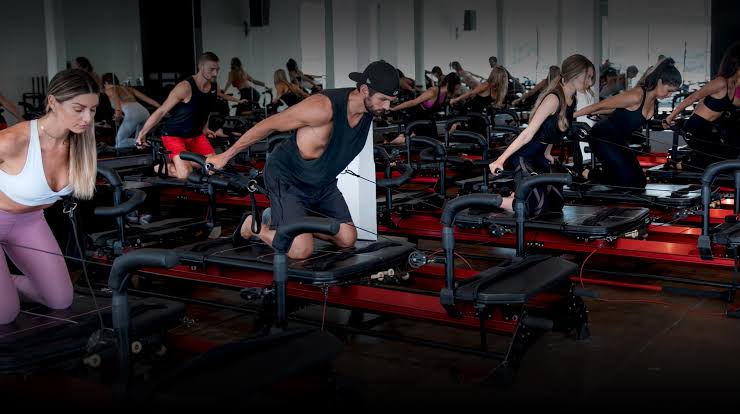
A Pilates Reformer is equipment designed to create resistance and support during exercise. It looks complex, but each part has a clear purpose and a good instructor makes it easy to understand quickly.
Main components
- Carriage — moves smoothly along the frame
- Springs — provide adjustable resistance
- Footbar — supports lower body exercises
- Straps — create resistance for arms and legs
The adjustable design means beginners and advanced practitioners can use the same machine, just at different resistance levels.
How resistance creates a full-body workout
Instead of heavy weights, the Reformer uses spring resistance for controlled strength-building.
Benefits of resistance-based training:
- Improved core engagement
- Better movement control
- Increased muscle endurance
- Enhanced body awareness
Because every movement takes focus and stability, a single session can train multiple muscle groups at once.
Reformer Pilates vs. Mat Pilates
Feature | Mat Pilates | Reformer Pilates |
|---|---|---|
Resistance | Bodyweight only | Adjustable springs |
Support | Limited | Machine-guided |
Exercise variety | Moderate | High |
Best for | Home practice, basics | All levels, faster progression |
Bottom line: Both follow the same core principles—breathing, control, alignment. The Reformer just adds support and adjustable resistance, making it easier to customize for your goals.
Benefits of Reformer Pilates for Beginners
Builds full-body strength
Every movement activates muscles throughout your body not just one area.
Strength benefits include:
- Improved core activation
- Increased muscle endurance
- Better functional strength
- Enhanced stability
Improves flexibility and mobility
The Reformer combines stretching with strength and stability work, so you move more efficiently while staying in control.
Regular practice may support:
- Increased range of motion
- Better joint mobility
- Improved body awareness
- More comfortable everyday movement
Supports better posture and alignment
Long hours sitting can hurt your posture. The Reformer teaches spinal awareness and better alignment habits that carry into daily life.
Posture benefits include:
- Improved spinal awareness
- Stronger supporting muscles
- More balanced movement patterns
Provides a low-impact option
Smooth movement and adjustable resistance make the Reformer accessible at any fitness level.
Reformer Pilates offers:
- Joint-friendly movement
- Adjustable intensity
- Support for different abilities
- Controlled progression
5 Beginner Reformer Exercises You Can Expect in Class
1) Footwork
What it does: Teaches alignment and lower body activation using the footbar.
Why it matters: It’s often the first exercise beginners learn a strong foundation for many other Reformer movements.
2) The Hundred on the Reformer
What it does: Builds core activation and breathing coordination.
Why it matters: Teaches you to connect breath with movement while staying in control.
3) Leg Circles and Strap Exercises
What it does: Improves hip mobility and coordination using the straps for support.
Why it matters: Helps you build confidence with the equipment while strengthening the hips and legs.
4) Elephant Exercise
What it does: Builds core control and hamstring flexibility using the moving carriage.
Why it matters: Teaches connection between your upper body, core, and lower body.
5) Mermaid Stretch
What it does: A gentle stretch that improves spinal mobility and side-body flexibility.
Why it matters: Combines relaxation with mobility, a nice balance to the more strength-focused exercises.
How to Choose the Right Reformer Pilates Class
Look for qualified instructors
A good instructor makes all the difference.
Look for instructors who offer:
- Clear technique guidance
- Personalized modifications
- Attention to alignment
- Supportive instruction
Choose a class based on your experience level
Beginners should start with classes built specifically for first-timers.
Beginner-focused classes typically include:
- An introduction to the equipment
- Basic movement principles
- Foundational exercises
- Gradual progression
Consider your fitness goals
People choose Reformer Pilates for different reasons strength, flexibility, posture, or rehab support.
Talk to your instructor about your goals. It helps them personalize your experience from day one.
Common Pilates Reformer Myths, Debunked
Myth: “Reformer Pilates is only for advanced practitioners”
Reality: The equipment is built to support beginners through adjustable resistance and guided movement.
Myth: “You need to be flexible before starting”
Reality: Flexibility is something Pilates helps you build—not a requirement to begin.
Myth: “Reformer Pilates is only stretching”
Reality: It’s a real strength workout. The resistance system challenges muscles throughout your body, building endurance and stability alongside flexibility.
Conclusion
The Pilates Reformer offers a versatile, effective way to build strength, flexibility, posture, and body awareness through controlled movement. It may look complex at first, but with the right instruction, it’s accessible to any experience level. Choosing a class with qualified instructors ensures safe technique and steady progress.
Ready to Get Started?
Contact us today to learn more about Reformer Pilates Classes at Carrie’s Pilates Plus and discover how personalized instruction can help you improve strength, flexibility, posture, and overall fitness.
Frequently Asked Questions
What is a Pilates Reformer used for?
It’s used to build strength, flexibility, balance, and posture through resistance-based exercises. It adapts to beginners, experienced practitioners, and specific fitness goals alike.
Is Reformer Pilates good for beginners?
Yes. Exercises can be adjusted for your fitness level and goals. Beginner classes introduce proper technique and equipment use in a safe environment.
How is a Reformer workout different from regular Pilates?
Reformer Pilates uses spring resistance and equipment to create more variety than mat Pilates, which relies mainly on bodyweight.
How often should beginners do Reformer Pilates?
Most beginners benefit from 1–3 sessions per week, depending on schedule and goals. Regular practice builds technique and strength faster.
Do I need prior Pilates experience before using a Reformer?
No. Beginner classes are built specifically to teach first-timers how the equipment works and how to move safely.
Can Reformer Pilates help with strength and weight management?
Yes, when combined with a balanced lifestyle. It builds lean muscle and improves movement efficiency, supporting healthier fitness habits over time.