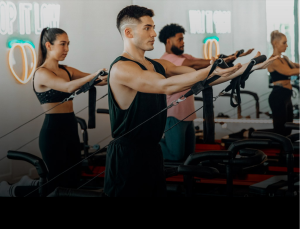
Thinking about becoming a Pilates teacher? Pilates teacher training can be a rewarding way to turn your interest in movement into a teaching skill. It can also be a useful addition to an existing fitness career.
But enjoying Pilates classes and being ready to teach Pilates are two different things.
Teaching requires more than knowing how exercises feel in your own body. You need to understand movement, communicate clearly, observe clients, provide useful feedback and create an environment where people can learn.
Before enrolling in a Pilates teacher training program, it is worth looking at your experience, learning style, career goals and commitment to practical training.
Here are seven important things to consider before you start.
7 Things to Consider Before Starting Pilates Teacher Training
There is no single answer to whether Pilates teacher training is right for everyone.
Your decision should depend on what you want to learn, where you want your training to take you and the type of Pilates environment in which you want to teach.
Before enrolling, consider these seven questions.
1. Are You Ready to Learn More Than the Exercises?
Taking a Pilates class is different from learning how to teach one.
As a participant, you focus primarily on your own movement. As a teacher, you need to understand what you are teaching and why.
Pilates teacher training may include:
- Movement technique
- Exercise repertoire
- Verbal cueing
- Demonstration skills
- Class structure
- Movement observation
- Client communication
- Modifications
- Practice teaching
- Instructor feedback
You also need to become comfortable watching other people move.
A good teacher needs to notice when a client needs a different cue, a modification or additional instruction.
That takes practice.
Consistency is an important part of teacher development. You should be prepared to study, practice, receive feedback and continue learning throughout the process.
2. How Much Pilates or Movement Experience Do You Have?
You do not necessarily need to be an advanced Pilates practitioner before considering teacher training.
Regular Pilates experience can give you a useful foundation. You may already understand common movement patterns, terminology and how a Pilates class is structured.
Previous fitness experience can also be helpful.
For example, you may already have experience with:
- Coaching
- Group fitness
- Personal training
- Movement instruction
- Client communication
- Exercise demonstrations
These skills can transfer into Pilates teaching.
However, every Pilates teacher training program has its own requirements.
Before applying, check the prerequisites carefully. Some programs may expect previous Pilates experience, while others may have different entry requirements.
3. Are You Comfortable Learning How to Teach?
Knowing how to perform an exercise does not automatically mean you know how to teach it.
Teaching requires you to communicate movement to people with different bodies, experience levels and learning styles.
You need to learn how to:
- Give clear verbal cues
- Demonstrate exercises
- Observe movement
- Correct technique
- Adjust your instructions
- Offer appropriate modifications
- Manage class flow
- Communicate with clients
For example, you may understand exactly what an exercise should feel like in your own body.
A client may experience it differently.
A teacher needs to recognize that difference and know how to respond.
This is why hands-on teaching practice can be an important part of Pilates instructor training.
4. What Kind of Pilates Teacher Do You Want to Become?
Your long-term goals should influence the type of training you choose.
Ask yourself what you want your teaching career to look like.
You might want to:
- Teach group Pilates classes
- Work with clients privately
- Add Pilates to an existing fitness career
- Teach at a specific studio
- Learn a particular Pilates method
- Develop a long-term career in Pilates instruction
These goals can lead you toward different types of training.
Someone who wants to teach within a specific studio may benefit from method-specific training.
Someone looking for broader professional development may want to compare programs with a wider curriculum.
Understanding your goal before enrolling makes it easier to evaluate the program’s curriculum, certification and practical experience.
5. Does the Training Program Match Your Learning Style?
People learn movement in different ways.
Some people enjoy studying theory and written material. Others learn best by watching, practicing and receiving feedback.
When comparing Pilates teacher training programs, look at how the training is actually delivered.
Ask whether the program includes:
- Technique instruction
- Movement repertoire
- Demonstration
- Practice teaching
- Instructor observation
- Feedback
- Class shadowing
- Mock teaching or assessment
Hands-on experience can be particularly useful because teaching is a practical skill.
Carrie’s Pilates teacher training includes technique and repertoire development along with practical components such as mic practice and class shadowing.
If you learn best by doing, understanding how much practical experience a program provides can be an important part of your decision.
6. What Does the Certification Actually Prepare You to Teach?
Not every Pilates certification means the same thing.
Programs can differ in:
- Teaching method
- Exercise repertoire
- Equipment
- Curriculum
- Assessment
- Practical requirements
- Certification scope
- Relationship with a specific studio
Before enrolling, ask questions such as:
What Pilates method does the program teach?
What exercises and equipment are included?
Is the training studio-specific or broader?
How is teaching competency evaluated?
What happens after certification?
These questions can help you understand exactly what the credential represents.
Method-Specific vs. Broader Pilates Training
Training Type | Primary Focus |
Method-specific training | Teaching a particular Pilates method or studio approach |
Studio-specific training | Preparing instructors to teach within a specific studio environment |
Broader Pilates certification | Developing a wider foundation in Pilates instruction |
Continuing education | Building additional skills after initial training |
Carrie’s Pilates certification is designed specifically around Carrie’s Method.
That makes it particularly relevant for people who want to learn and potentially teach the approach used at Carrie’s Pilates Plus.
It should not automatically be viewed as equivalent to every broader Pilates certification program.
7. Can You See Yourself Teaching in a Real Studio?
Completing teacher training is only one part of becoming an instructor.
It is also worth thinking about whether you would enjoy the day-to-day experience of teaching.
Ask yourself:
- Do I enjoy helping other people learn?
- Am I comfortable speaking to a group?
- Do I enjoy coaching movement?
- Can I give clear instructions?
- Am I comfortable making corrections?
- Do I enjoy working with people at different experience levels?
- Would I enjoy creating energy in a studio environment?
Teaching Pilates involves both movement knowledge and people skills.
You may work with beginners, experienced clients and people who need different levels of instruction within the same class.
Understanding the culture of the studio where you hope to teach can also be useful.
Carrie’s Pilates emphasizes community, care and top trainers, making the studio environment an important part of understanding its teaching approach.
How Do You Choose the Right Pilates Teacher Training Program?
Once you understand your own goals, start comparing programs based on what they actually teach.
Do not choose a program based only on the word “certification.”
Look at the curriculum, practical training, instructors, assessment process and what the certification prepares you to do.
Look Beyond the Certificate
A certificate is one part of a training program.
Two programs can both offer Pilates certification while providing very different educational experiences.
Before enrolling, review:
- The curriculum
- Training hours
- Practical experience
- Teaching practice
- Instructor feedback
- Assessment requirements
- Certification scope
- Continuing education options
The goal should be to develop useful teaching skills, not simply complete a credential as quickly as possible.
Look for Hands-On Training
Teaching Pilates is a practical skill.
You need opportunities to:
- Perform and study movements.
- Observe experienced instructors.
- Practice giving instructions.
- Teach other people.
- Receive feedback.
- Make adjustments.
- Practice again.
Carrie’s Pilates training incorporates technique, repertoire, mic practice and class shadowing.
When comparing programs, ask exactly how hands-on training works and how much teaching practice is included.
Understand What Happens After Training
It is also useful to understand the potential next steps after completing a program.
Ask:
- Does the training connect with a particular studio?
- Are there auditions?
- Are teaching opportunities available?
- Is additional training expected?
- Is continuing education available?
- What does the certification qualify you to teach?
Carrie’s Pilates currently connects its teacher training pathway with its studio environment and holds auditions for trainers certified in its method.
If your goal is specifically to teach Carrie’s Method, that connection may be relevant to your decision.
Training and hiring policies can change, so applicants should contact Carrie’s Pilates directly for the latest information.
What Is Included in Carrie’s Pilates Teacher Training?
Carrie’s Pilates teacher training is best understood as a method-specific training pathway.
The program is designed for people interested in learning to teach Carrie’s Method rather than serving as a universal certification for every Pilates teaching environment.
The training focuses on the foundations needed to understand and communicate the method.
Key components include:
- Technique
- Movement repertoire
- Mic practice
- Class shadowing
- Practice teaching
- Teaching development
- Mock class experience
- Audition opportunity
The current certification information states that the program is led by Carrie Minter or a lead instructor from the flagship West Hollywood studio.
This gives trainees an opportunity to learn within the teaching approach and studio environment associated with Carrie’s Method.
Carrie’s Pilates also holds auditions for trainers who are certified in its method.
If you specifically want to teach Carrie’s Method, understanding this relationship between training and the studio environment can help you decide whether the program fits your goals.
Because prerequisites, program availability and training details can change, contact the Carrie’s Pilates team for the most current information before applying.
Is Pilates Teacher Training Right for You?
Pilates teacher training may be worth exploring if you enjoy movement, coaching and helping other people learn.
Before enrolling, consider these five questions:
Question | Why It Matters |
Do I enjoy Pilates and movement? | You will spend significant time studying and practicing movement. |
Am I willing to practice? | Teaching skills develop through repetition and feedback. |
Do I enjoy working with people? | Communication is a major part of teaching. |
What do I want to teach? | Your goals can influence which training program fits. |
Where do I want to teach? | Some programs are designed around a specific method or studio. |
There is no single training path that is right for everyone.
The important thing is to understand what a program teaches, what its certification represents and how closely it aligns with your goals.
If your goal is to teach Carrie’s Method, Carrie’s Pilates offers a method-focused certification pathway built around technique, repertoire, practical teaching experience and the studio’s approach to instruction.
Pilates Teacher Training Checklist
Before enrolling, make sure you understand:
- Training prerequisites
- Curriculum
- Pilates method taught
- Equipment covered
- Practical training requirements
- Practice teaching opportunities
- Instructor feedback
- Assessment process
- Certification scope
- Opportunities after training
- Continuing education
- Total time and financial commitment
Taking the time to answer these questions can help you make a more informed decision about your Pilates teaching education.
Conclusion
Pilates teacher training can be a natural next step for people who want to move from participating in Pilates to helping others learn.
Before enrolling, consider your Pilates experience, willingness to practice, communication skills, career goals and preferred teaching environment.
Then compare programs based on what they actually teach.
Look beyond the certificate itself. Understand the curriculum, practical training, assessment process and scope of the certification.
If your goal is specifically to teach Carrie’s Method, Carrie’s Pilates offers a method-focused training pathway built around technique, repertoire, practical teaching experience and the studio’s approach to instruction.
The right training program is ultimately the one that aligns with the kind of Pilates teacher you want to become.
Frequently Asked Questions Training
Is Pilates teacher training difficult?
Pilates teacher training can be challenging because it involves much more than learning a collection of exercises.
Trainees may need to develop movement knowledge, teaching skills, communication skills and the ability to lead a class.
Practical training also requires repetition, practice and feedback.
Do I need previous Pilates experience before teacher training?
Requirements vary between programs.
Previous Pilates experience can be useful because you may already be familiar with movement terminology, exercises and class structure.
However, you should always check the specific prerequisites for the program you are considering.
What do you learn in a Pilates teacher training course?
Depending on the program, training may include:
- Pilates technique
- Movement repertoire
- Teaching methodology
- Verbal cueing
- Class structure
- Movement observation
- Practice teaching
- Client communication
- Modifications
- Assessment
Method-specific programs may also focus on the exercises and teaching standards associated with a particular studio or method.
How do I choose a Pilates teacher training certification program?
Start with the curriculum.
Then look at the amount of hands-on training, teaching practice, instructor feedback and assessment.
You should also understand what the certification represents and what type of teaching environment the program prepares you for.
Is Pilates teacher training worth it?
The value depends on your goals and the program you choose.
For someone who wants to teach Pilates professionally or add Pilates instruction to an existing fitness career, formal training can provide a structured way to develop movement knowledge and teaching skills.
The scope and quality of individual programs can vary, so compare the curriculum, practical training and certification carefully.
Can I become a Pilates teacher if I am new to fitness?
Possibly.
Requirements vary between training providers.
If you are new to fitness, developing familiarity with Pilates, movement and basic coaching can be a useful starting point.
Check the prerequisites of the specific program and consider whether you are ready for the commitment involved in learning both movement technique and teaching skills.
What is the difference between Pilates teacher training and Pilates certification?
Teacher training generally describes the educational process used to develop the knowledge and practical skills needed to teach.
Certification generally refers to the credential or recognition awarded after completing a program’s requirements.
The exact meaning can vary between providers, so check what a particular certification represents before enrolling.
Does Carrie’s Pilates offer teacher certification?
Yes. Carrie’s Pilates offers a certification program designed for people who want to learn to teach Carrie’s Method.
The current program emphasizes technique, movement repertoire, mic practice, class shadowing and practical teaching development.
Interested applicants should contact Carrie’s Pilates directly for current prerequisites, training dates and program details